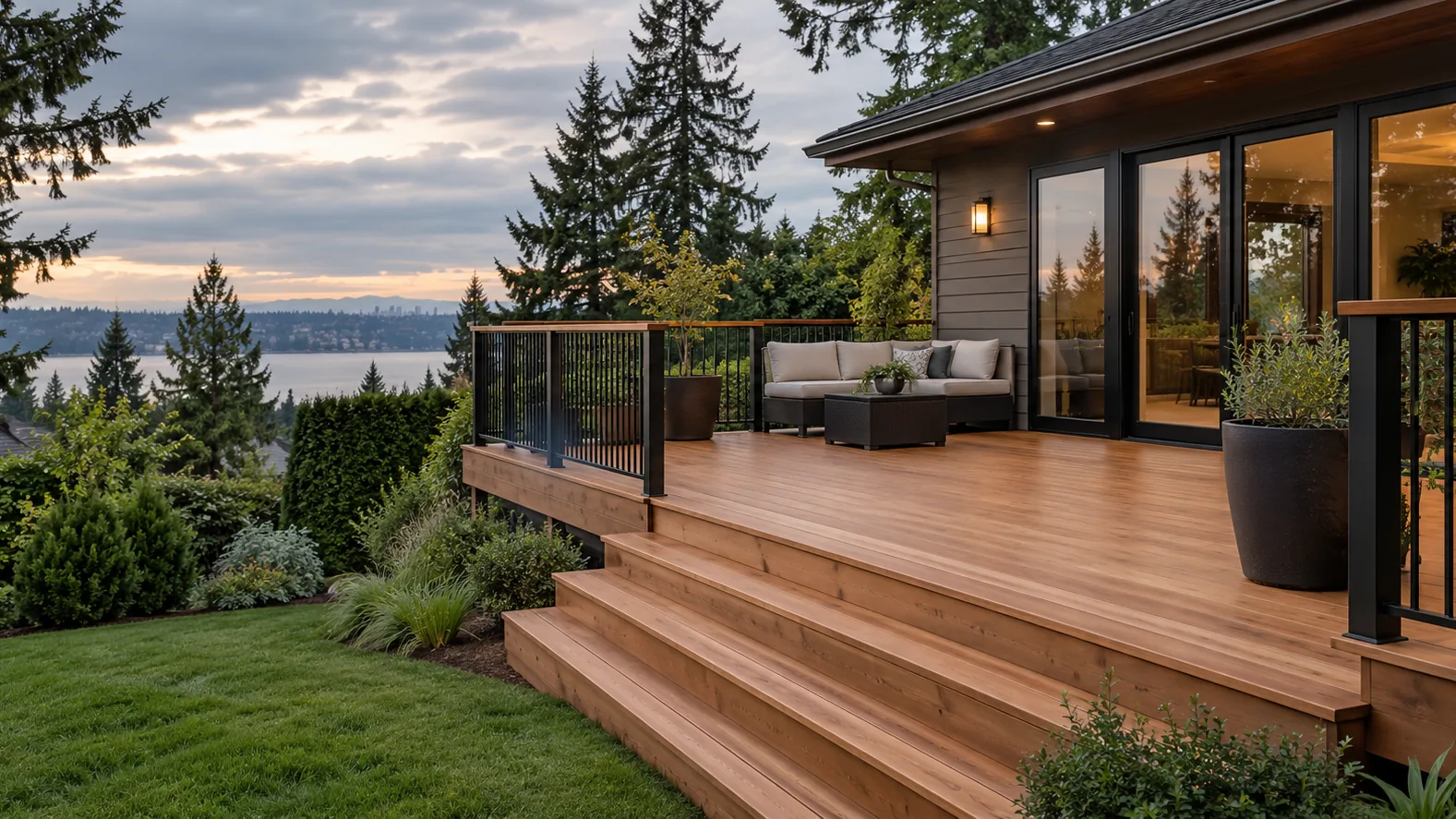
New Deck Construction
A new deck page should match the material and the site. Cedar deck installation focuses on Western Red Cedar, appearance choices, finishing and maintenance expectations. Composite deck installation covers the separate material decision for homeowners who want a different surface and maintenance profile.
If the main question is layout, circulation, levels, stairs and how the deck connects to the house, custom deck design provides the planning path before material and construction details take over.
Deck Repair, Resurfacing and Replacement
These three services solve different problems. Deck repair focuses on damaged components and localized structural or surface issues. Deck resurfacing is for replacing the walking surface when the framing is suitable to keep. Deck replacement covers a full rebuild when the condition, layout or remaining structure no longer supports a sensible repair path.
The first step is condition, not preference. Photos of the deck surface, stairs, railings and visible framing can help separate cosmetic wear from a broader structural problem.
Cedar Restoration, Staining and Maintenance
Weathered cedar can need different levels of work. Restoration addresses a surface that may need cleaning, old-finish removal, sanding or other preparation before refinishing. Staining and sealing is a narrower finish-focused service. Maintenance covers ongoing care intended to catch wear before it becomes a larger repair issue.
These pages stay separate because the preparation, labor and customer decision are different even when the same deck is involved.
Railings and Stairs
Deck railings and stairs affect safety, movement and the finished look of the deck. Use deck railings when the focus is the guard or railing system. Use deck stairs when the project is primarily about a stair run, landing, tread layout or access from the deck to grade.
On raised and multi-level decks, it often makes sense to plan both at the same time.
Deck Types for Different Sites
The site can change the whole project. Ground-level decks need careful attention to clearance and drainage. Raised decks bring stairs and guards into the plan. Elevated and multi-level decks add height, support and use of the space below. Rooftop decks have roof-structure and membrane constraints. Hillside or sloped-lot decks are driven by changing grade and access.
Choosing the correct deck-type page keeps the technical discussion tied to the property instead of forcing every project into one generic layout.
Cedar or Composite?
Cedar and composite can both make sense in Bellevue, but they answer different priorities. Cedar gives you a natural wood surface with finishing and maintenance decisions that should be understood before installation. Composite gives you a manufactured surface with different product choices and care requirements.
The material decision should follow the project conditions. Height, drainage, exposure, framing and how the deck will be used still matter whichever surface you choose.
Bellevue Site and Permit Considerations
Deck height, structural changes, stairs, railings and the relationship to the house can affect the planning and permit path. Requirements depend on the actual scope. WA-GoodHome does not use a generic promise that every deck follows the same process.
The useful preparation is to identify the property, the existing deck if any, the desired size and height, and the main access points. From there, the project can be discussed with the right service boundaries.
Start with the Right Deck Service
If you already know the service, use the dedicated page. If the deck problem is unclear, send photos and a short description of the condition. For a new deck, include the yard area, door height, preferred material and any layout ideas.
Call (223) 226-1828. For unrelated home projects, browse all home services.
Deck Services service pages
Choose the page that matches the actual scope so the project discussion starts with the right boundaries.