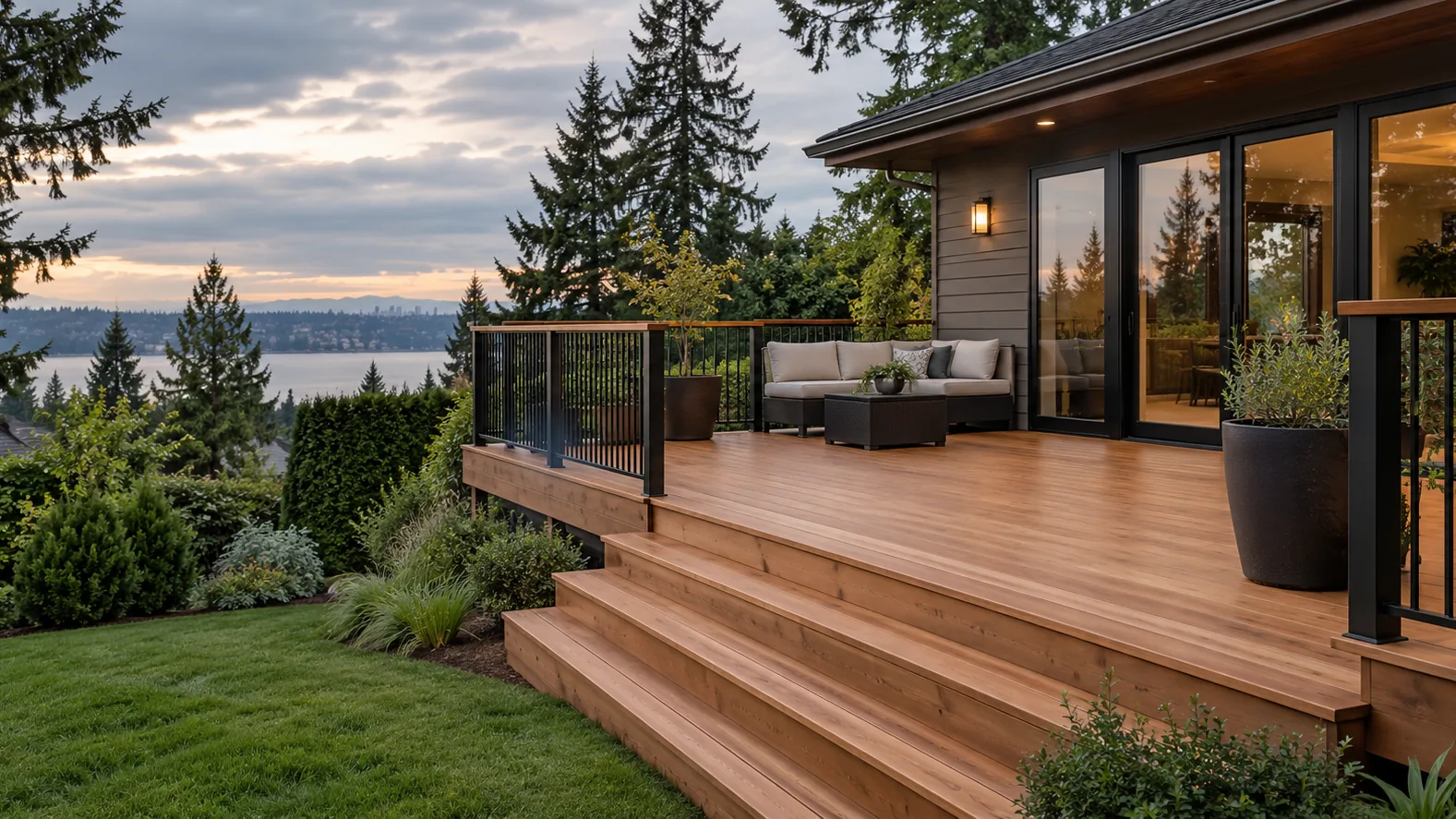
What Redecking Can Change
A resurfacing project centers on removing worn decking and installing a new surface. It can also involve fascia, exposed edges and the transitions to stairs or doorways. Agree on those details at the outset: a new walking surface does not automatically include new stairs, railings or every visible trim piece. The scope should identify what will stay as clearly as what will be replaced.
Start With the Structure You Hope to Keep
The value of redecking depends on the condition of the existing support structure. Joists, beams, posts and their connections need to be considered together, including the ledger where the deck attaches to the house. Age alone is not enough to answer whether they should remain, and photos cannot establish what is hidden beneath the boards. Discuss visible softness, movement, sagging, water damage and past repairs. Surface removal may reveal additional concerns; agree how those findings will be reviewed before the project continues.
Choose Between Surface Renewal and Smaller Repairs
If the boards are serviceable and the main issue is a faded finish, staining and sealing may address the need without replacing the surface. Weathered cedar that needs more extensive preparation belongs in a cedar restoration discussion. A few isolated damaged components may call for deck repair. Widespread board wear is a different problem from either finish renewal or a localized fix.
Know When Replacement Deserves a Closer Look
Where major parts of the framing are unsuitable to retain, resurfacing may leave too much of the original problem in place. A poorly working layout can also make a new surface less useful than expected. Compare full deck replacement if you want to change the footprint, height or access, or if the review points to substantial rebuilding underneath.
Review a Change From Wood to Composite
Keeping the same footprint does not mean a new material can be installed on the old arrangement without further checks. The proposed boards, framing and fastening details need to be considered together. For composite decking, bring the product you are considering into that discussion. For wood, decide how replacement boards and retained components will look together; aged surfaces may not match new material exactly.
Include Rails, Stairs and Edges in the Decision
Removing boards may affect details around railing posts, stair connections or perimeter trim. Identify whether those components are staying and whether their condition supports that plan. A surface-focused inquiry can become a broader project once the existing deck is examined. In Bellevue, repairs to joists or beams require plan review under the City’s component-specific remodel guidance. If surface removal reveals framing work, revisit the scope and required review before continuing rather than treating every additional repair as part of replacing boards.
Show Us the Existing Deck
Share overall photos, close-ups of worn areas, approximate dimensions and any known repair history. Say whether you want to keep the layout or change materials. Call WA-GoodHome at (223) 226-1828 or use the contact page to discuss a resurfacing project.