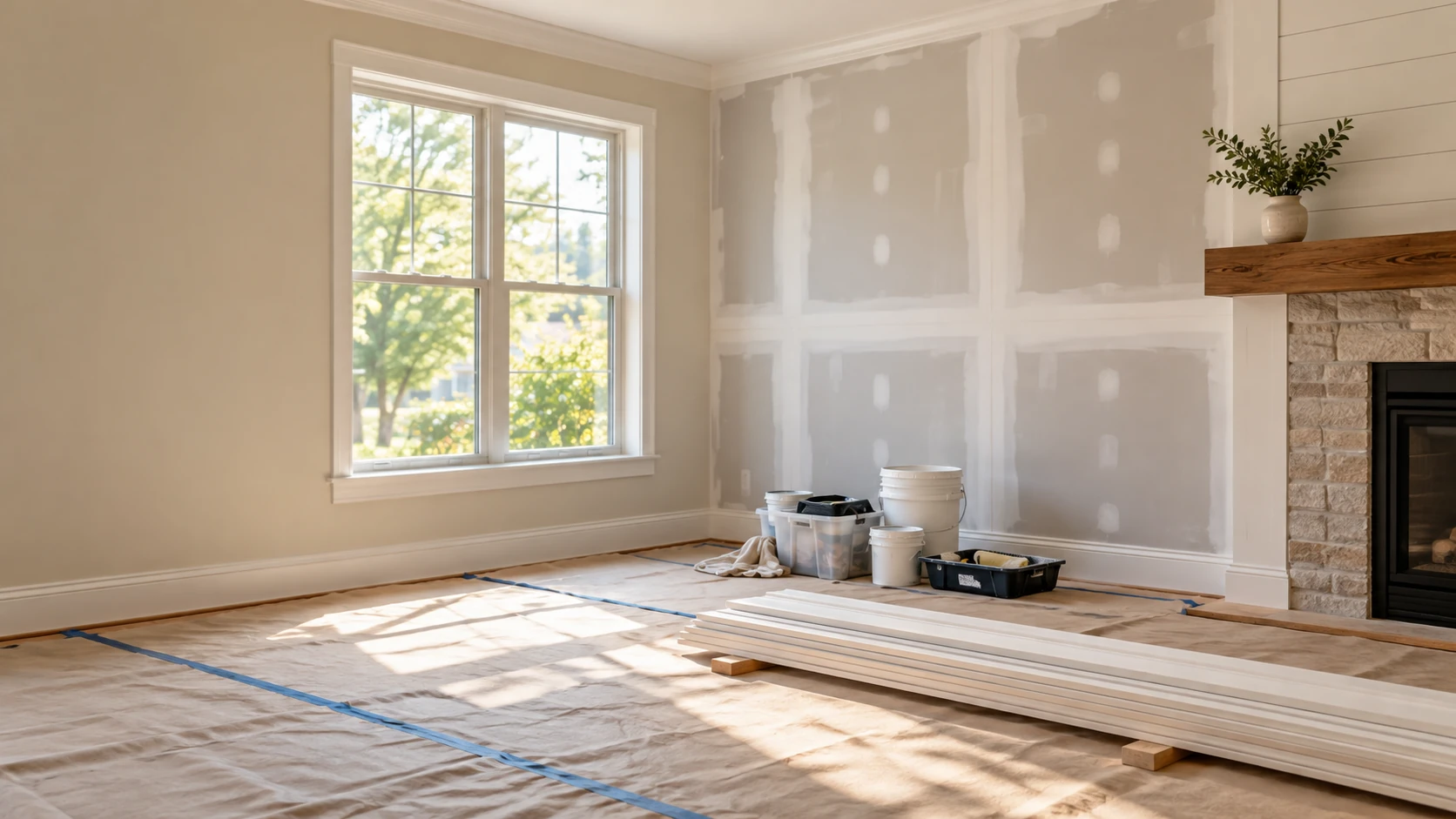
What Drywall Installation Covers
Use Drywall Installation when this is the main job. To define the work, start with board thickness/type, framing, cutouts, fastening, seams, and finish readiness. The service can include texture/color/edge integration where relevant.
Drywall installation covers new board placement; finishing, painting and underlying framing/utility work remain distinct decisions. Do not hide active moisture, structural movement or source problems behind cosmetic work; those require separate repair first.
For that related need, use painting, drywall & ceilings rather than stretching this page beyond its intended boundary.
Identify Damage Before Drywall
Start drywall installation with the condition that can be seen or reproduced. Record board thickness/type, framing, cutouts, fastening, seams, and finish readiness, when the problem began and whether it is constant or intermittent.
A symptom is not a diagnosis. Photos, video, model information and repair history can narrow the scope, while hidden moisture, structure, wiring or other system causes may need separate investigation.
Keep that decision separate by comparing the dedicated drywall & wall repair service when it applies. When the project crosses into that neighboring intent, the dedicated drywall finishing page explains the separate scope.
Patch Size, Backing and Seam Strategy
In drywall installation, “Patch Size, Backing and Seam Strategy” can change the preparation or the boundary with a related service. Start with board thickness/type, framing, cutouts, fastening, seams, and finish readiness.
The purpose is to make the scope more specific, not to add unrelated work to the page. Drywall installation covers new board placement; finishing, painting and underlying framing/utility work remain distinct decisions.
Texture Matching, Primer and Paint Blend
Material selection changes more than appearance in drywall installation. The useful checks are board thickness/type, framing, cutouts, fastening, seams, and finish readiness.
If the project needs to match existing color, texture or profile, explain the target while allowing for normal variation in older materials.
Surface Preparation for Drywall
Choose materials for drywall installation by compatibility with the site, not only by color or style. Compare board thickness/type, framing, cutouts, fastening, seams, and finish readiness; product thickness, movement, edge conditions and maintenance can all affect the finished result.
Where new work meets an older surface, decide whether the goal is a close blend, a clean transition or a deliberate contrast. Exact matching should not be promised on aged or weathered finishes.
Repair and Finish Options for Drywall
Choose materials for drywall installation by compatibility with the site, not only by color or style. Compare board thickness/type, framing, cutouts, fastening, seams, and finish readiness; product thickness, movement, edge conditions and maintenance can all affect the finished result.
Where new work meets an older surface, decide whether the goal is a close blend, a clean transition or a deliberate contrast. Exact matching should not be promised on aged or weathered finishes.
For this part of drywall installation, focus on repair and finish options for drywall. Check board thickness/type, framing, cutouts in that narrower context before moving to the next decision.
Color, Sheen or Texture for Drywall
Choose materials for drywall installation by compatibility with the site, not only by color or style. Compare board thickness/type, framing, cutouts, fastening, seams, and finish readiness; product thickness, movement, edge conditions and maintenance can all affect the finished result.
Where new work meets an older surface, decide whether the goal is a close blend, a clean transition or a deliberate contrast. Exact matching should not be promised on aged or weathered finishes.
For this part of drywall installation, focus on color, sheen or texture for drywall. Check board thickness/type, framing, cutouts in that narrower context before moving to the next decision.
Protect Adjacent Areas During Drywall
Plan the route to and around drywall installation before parts are unpacked. Check board thickness/type, framing, cutouts, fastening, seams, and finish readiness, then look at doors, stairs, gates, elevators and the floor or wall surfaces that need protection.
If a finished item will be difficult to move, assembly near the final position can reduce handling. Include removal or disposal in the scope when it is not incidental.
Fix Moisture or Structural Causes Before Drywall
For drywall installation, drainage and sealing are system details rather than decorative extras. Check board thickness/type, framing, cutouts, fastening, seams, and finish readiness.
A new coating, grout joint or bead of sealant cannot replace a failed flashing, waterproofing layer or damaged substrate.
Request Drywall Installation in Bellevue
To scope drywall installation, send the project facts before asking for a schedule: share photos in good light, the approximate damaged area, known moisture history and the texture, color or finish you want to match. Add the Bellevue/Eastside location and any removal, access or damage notes.
Call WA-GoodHome at (223) 226-1828 or send the scope through /contact/. Pricing, timing and other commitments belong after the project has been reviewed.
