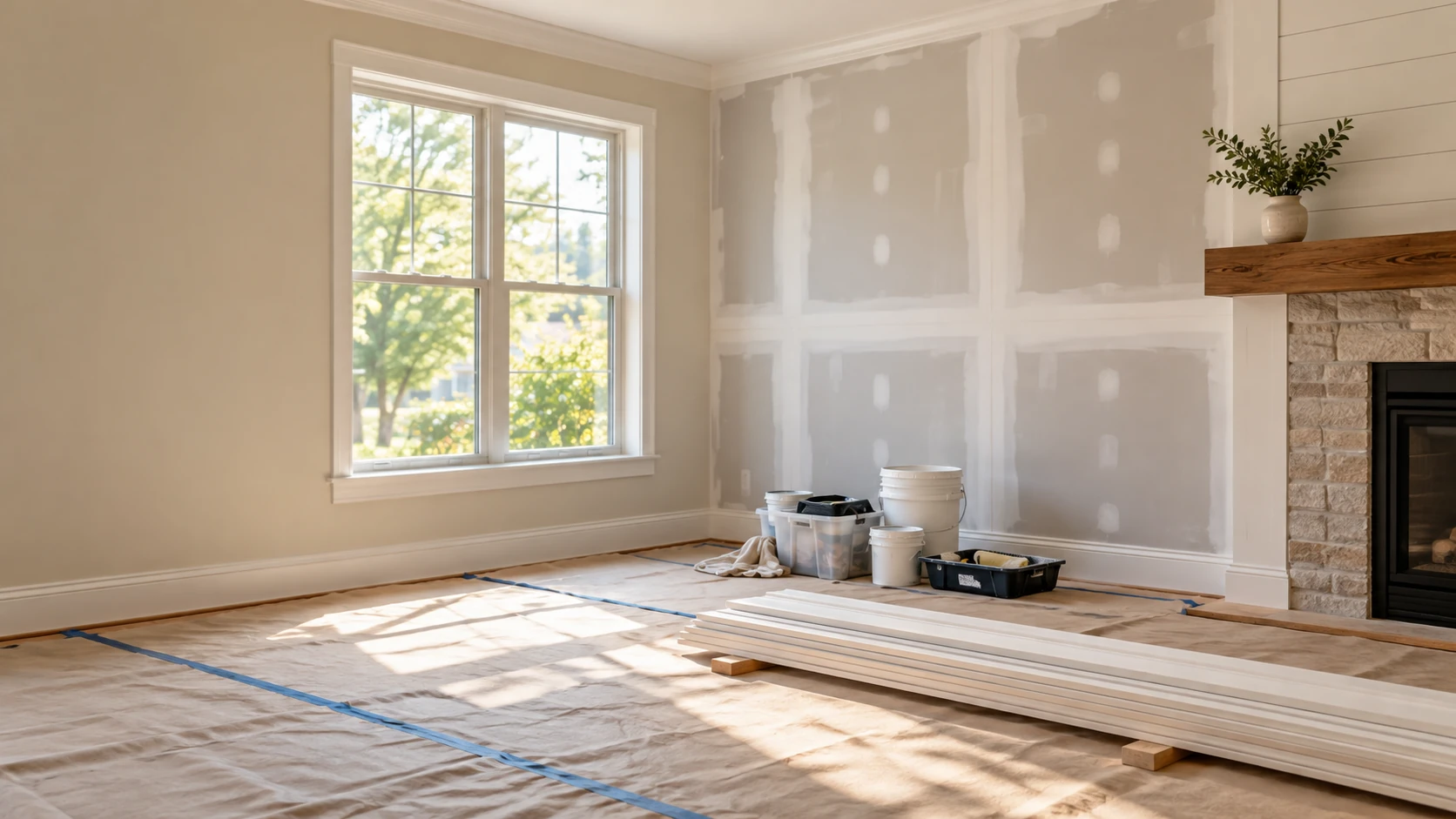
What Drywall & Wall Repair Covers
Use Drywall & Wall Repair when this is the main job. To define the work, start with hole/crack size, backing, seams, compound, texture, and primer/paint blend. The service can include texture/color/edge integration where relevant.
Finish work should not hide an active moisture source, movement or damage that needs repair first. Do not hide active moisture, structural movement or source problems behind cosmetic work; those require separate repair first.
When the project crosses into that neighboring intent, the dedicated painting, drywall & ceilings page explains the separate scope.
Identify Damage Before Drywall & Wall
Document drywall & wall repair before choosing a fix. Useful clues include hole/crack size, backing, seams, compound, texture, and primer/paint blend.
If the visible damage is being caused by a different system, that source should be addressed first so the same symptom does not return after the repair.
If that adjacent scope is part of the same project, review drywall finishing before the work is combined into one request. Keep that decision separate by comparing the dedicated drywall installation service when it applies.
Patch Size, Backing and Seam Strategy
In drywall & wall repair, “Patch Size, Backing and Seam Strategy” can change the preparation or the boundary with a related service. Start with hole/crack size, backing, seams, compound, texture, and primer/paint blend.
The purpose is to make the scope more specific, not to add unrelated work to the page. Drywall repair should restore the surface after the cause of damage is resolved; repeated cracks or moisture can signal a separate problem.
Texture Matching, Primer and Paint Blend
The visible finish for drywall & wall repair sits on top of a substrate and connection details that still have to work. Review hole/crack size, backing, seams, compound, texture, and primer/paint blend before selecting the final material.
Manufacturer instructions, exposure and adjacent surfaces can rule out a product that otherwise looks suitable.
Surface Preparation for Drywall & Wall
Choose materials for drywall & wall repair by compatibility with the site, not only by color or style. Compare hole/crack size, backing, seams, compound, texture, and primer/paint blend; product thickness, movement, edge conditions and maintenance can all affect the finished result.
Where new work meets an older surface, decide whether the goal is a close blend, a clean transition or a deliberate contrast. Exact matching should not be promised on aged or weathered finishes.
Repair and Finish Options for Drywall & Wall
Choose materials for drywall & wall repair by compatibility with the site, not only by color or style. Compare hole/crack size, backing, seams, compound, texture, and primer/paint blend; product thickness, movement, edge conditions and maintenance can all affect the finished result.
Where new work meets an older surface, decide whether the goal is a close blend, a clean transition or a deliberate contrast. Exact matching should not be promised on aged or weathered finishes.
For this part of drywall & wall repair, focus on repair and finish options for drywall & wall. Check hole/crack size, backing, seams in that narrower context before moving to the next decision.
Color, Sheen or Texture for Drywall & Wall
Choose materials for drywall & wall repair by compatibility with the site, not only by color or style. Compare hole/crack size, backing, seams, compound, texture, and primer/paint blend; product thickness, movement, edge conditions and maintenance can all affect the finished result.
Where new work meets an older surface, decide whether the goal is a close blend, a clean transition or a deliberate contrast. Exact matching should not be promised on aged or weathered finishes.
For this part of drywall & wall repair, focus on color, sheen or texture for drywall & wall. Check hole/crack size, backing, seams in that narrower context before moving to the next decision.
Protect Adjacent Areas During Drywall & Wall
Plan the route to and around drywall & wall repair before parts are unpacked. Check hole/crack size, backing, seams, compound, texture, and primer/paint blend, then look at doors, stairs, gates, elevators and the floor or wall surfaces that need protection.
If a finished item will be difficult to move, assembly near the final position can reduce handling. Include removal or disposal in the scope when it is not incidental.
Fix Moisture or Structural Causes Before Drywall & Wall
Water can change the outcome of drywall & wall repair even when the visible work is small. Review hole/crack size, backing, seams, compound, texture, and primer/paint blend and make sure water has a deliberate path away from the assembly.
Active leaks, rot or moisture damage should be corrected before a finish, sealant or cosmetic repair covers the evidence. Use current product instructions for the actual substrate.
Request Drywall & Wall Repair in Bellevue
To scope drywall & wall repair, send the project facts before asking for a schedule: share photos in good light, the approximate damaged area, known moisture history and the texture, color or finish you want to match. Add the Bellevue/Eastside location and any removal, access or damage notes.
Reach WA-GoodHome at (223) 226-1828 or through the contact page. The purpose of the first review is to identify the right service path and any missing information.
