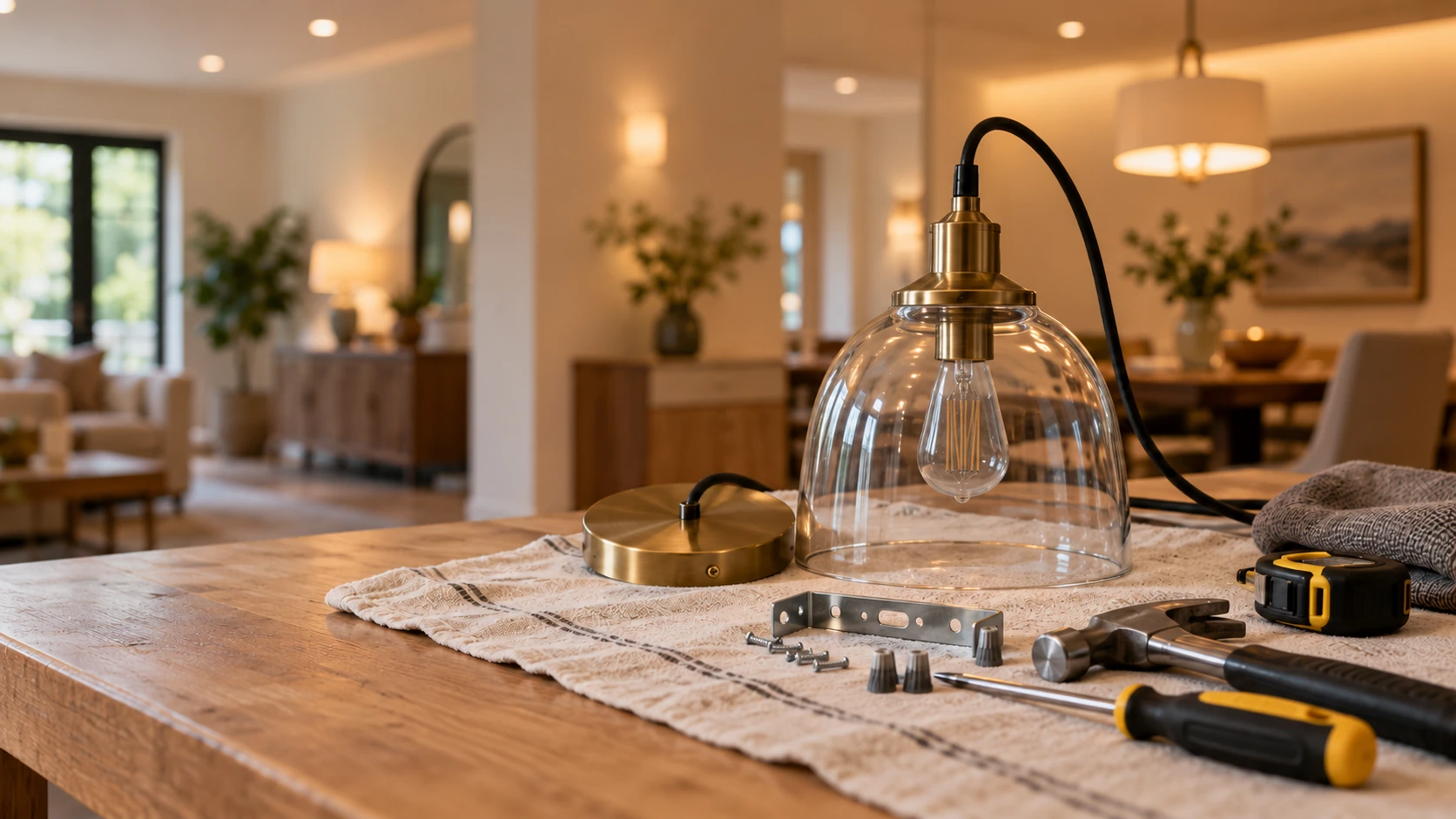
Choose the purpose of the accent lighting
Under-cabinet task lighting should illuminate the work surface without leaving dark gaps. A shelf or artwork may need a narrower pool of light, while a cove can provide an indirect glow. Describe what you want to see from normal seating and standing positions. This helps separate an accent-lighting layout from a general room-lighting replacement within our Electrical & Lighting services.
Power supplies and existing connections
A strip, its driver or power supply, and its controls form one system. An existing outlet does not by itself establish that every component is suitable. The review includes where power is available, whether equipment can remain accessible and where cables would enter cabinets or walls. Photos may show the starting point, but concealed connections must be assessed on site; there is no need to expose wiring for an inquiry.
Mounting, glare and the finished appearance
Profiles, diffusers and fixture depth can affect whether individual light points are visible and whether the light reflects sharply off a countertop. Cabinet lips, shelf edges and the material being mounted to also matter. The mounting plan should account for secure attachment, space for the selected equipment and access for later replacement. Existing adhesive residue or damaged finishes may need attention before a new light is fitted.
Dimming and smart controls
Decide whether the lights should operate with the room lighting, from their own control or through an existing smart-home system. A dimmable lamp or strip still needs a compatible driver and dimmer. Color-changing products may require their own controller. Identify who uses the room and whether a simple wall control is important; an app-only arrangement can be inconvenient for guests or daily kitchen use.
An existing location or a new cable route
Replacing a strip in the same place may still change the driver size, mounting profile or cable connections. Adding a run across several cabinets introduces decisions about transitions, visible cable channels and access through finished surfaces. Identify any patching or cabinet alterations with the lighting work so the finished result is understood before scheduling. A new circuit or major wiring change is a separate electrical scope.
Electrical scope and local requirements
Hardwired connections, new wiring and circuit changes need a scope review by the appropriately qualified party. The actual work and property location determine applicable permit and inspection requirements. Those responsibilities should be agreed before installation. Selecting a plug-in product does not settle every question about its location, mounting or suitability; the selected product instructions and existing conditions still matter.
Details that make the first review useful
Send wide photos of the cabinet, shelf or feature, the approximate lengths, and a close view of any existing fixture or accessible product label. Include the product link, desired color appearance, current controls and whether nearby surfaces will be refinished. If the power-supply location is unknown, say so. A lighting request can begin with the intended result before a product has been purchased.
When exterior lighting is the better scope
For paths, patios or exterior wall fixtures, see outdoor lighting installation. A system intended to remain along eaves or rooflines belongs with permanent outdoor lighting installation. Those projects have different weather exposure, access and cable-route questions from an indoor cabinet or display. Temporary decorative displays are covered by seasonal and holiday lighting.
Request accent lighting installation
Call (223) 226-1828 or contact WA-GoodHome with your city, the area to be lit and any product details. We can review the layout, installation access and electrical work involved, then discuss the next assessment and scheduling for the defined project.