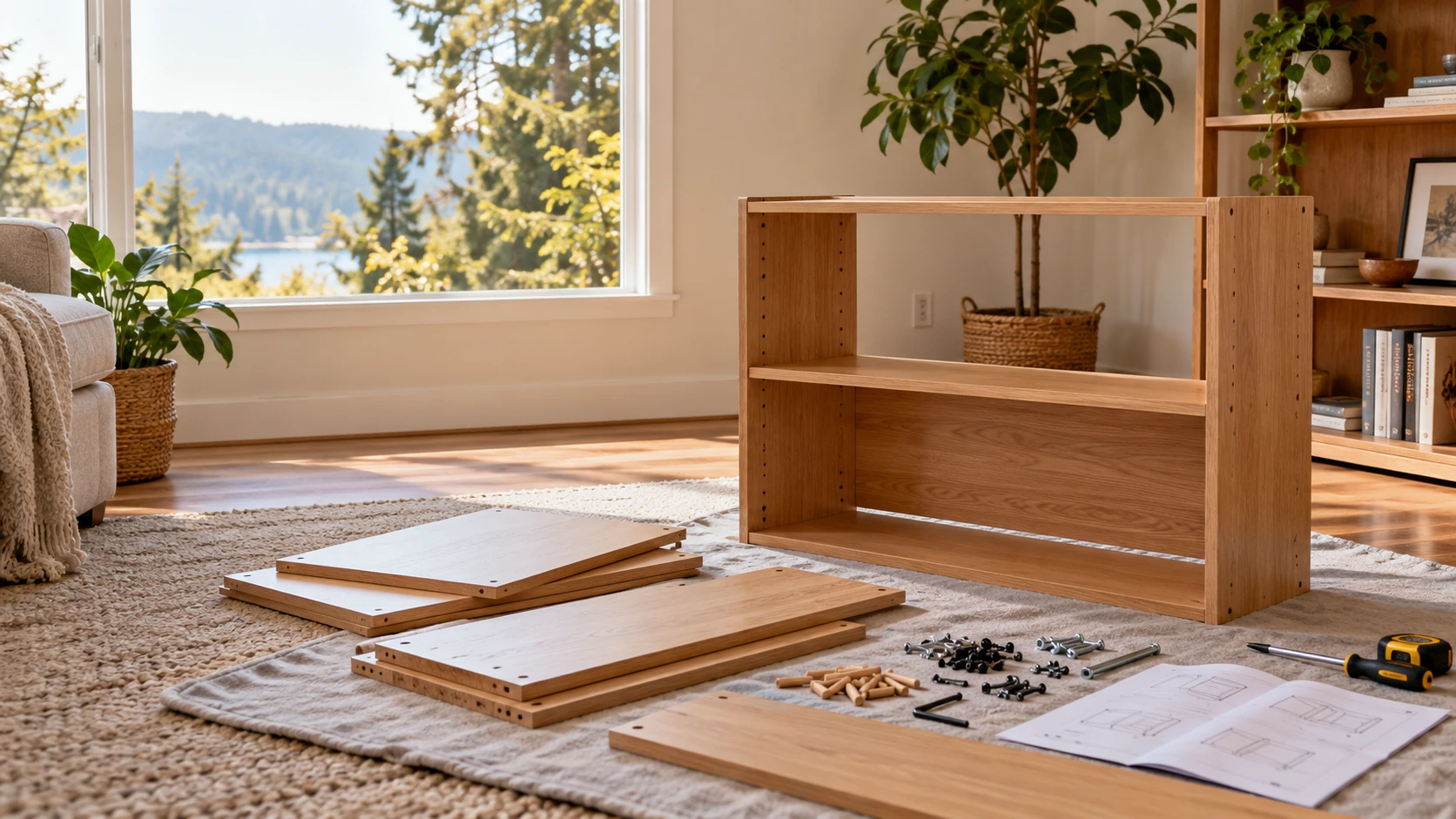
Identify the Cabinet Format and Components
A low storage cabinet, tall utility cupboard and modular set may have similar-looking panels but different support and fastening requirements. Share the model, dimensions, number of units and complete manual. Identify shelves, drawers, doors, legs or leveling feet, and any joining pieces purchased separately. A product photograph may show optional parts that are not included in your boxes.
This service assembles the supplied furniture. A freestanding unit that needs an anti-tip attachment differs from a cabinet designed to hang entirely from a wall. If the product is wall-mounted, show its mounting instructions before scheduling so the supporting surface and installation scope can be reviewed.
Prepare the Kit and Working Area
Have all packages, labeled hardware and the parts list available. Report missing shelf pins, runners, hinges or connectors, along with shipping damage or assembly already attempted. Proprietary fittings should be matched to the manual; substitute screws can damage panels or leave joints unsupported even when they appear to fit.
Choose the cabinet’s final position before the body is built. Account for door swings, drawer extension, baseboards, nearby outlets and other furniture. A tall cabinet may need clearance to be raised into position. In a condo or upstairs room, include elevator access, stair turns and the route from the delivered boxes. Clear a protected surface for panels and hardware to keep finished faces and flooring from being marked.
Square the Body Before Aligning Doors and Drawers
Panel orientation, fixed shelves and the back are assembled in the product’s specified sequence. The cabinet must be supported in its intended position before door gaps and drawer travel can be judged. Leveling feet are adjusted only where provided, and shelves sit on the correct supplied supports rather than loose or mismatched fittings.
Hinges and runners are adjusted within their designed range so doors close and drawers operate without rubbing or forcing. Persistent misalignment may come from an incorrectly assembled body, an unsuitable floor or damaged components. A cracked panel, stripped joint or failed drawer mechanism is a repair issue to resolve rather than conceal with further adjustment.
Complete Required Stability and Attachment Steps
Send the anti-tip or mounting pages from the manual, plus a photo of the intended wall. The wall material, fastening positions and product hardware determine what is needed; the visible finish alone does not prove adequate support. Required attachment remains part of the setup to resolve before loading the cabinet. Keep the manufacturer’s shelf-load and use instructions after handoff.
Separate Storage Furniture From Kitchen or Custom Cabinet Work
Assembling a boxed cabinet does not include a kitchen cabinet run, countertop fitting, custom cabinetry or wall reconstruction. Those projects involve a different layout and installation scope. If your item is primarily clothes storage, see dresser and wardrobe assembly. Open cases for books belong under bookcase assembly. For several other furniture types, list them through furniture assembly so each item can be considered separately.
Request Storage Cabinet Assembly in Bellevue
Send the product link or model, unit count, manual and photos of the boxes and final position. Include your city, delivery location, access restrictions and any damaged or missing pieces. Call WA-GoodHome at (223) 226-1828 or use the contact page to discuss the assembly and attachment details.